
When the Sun Goes Down: The Postpartum Anxiety Nobody Mentioned
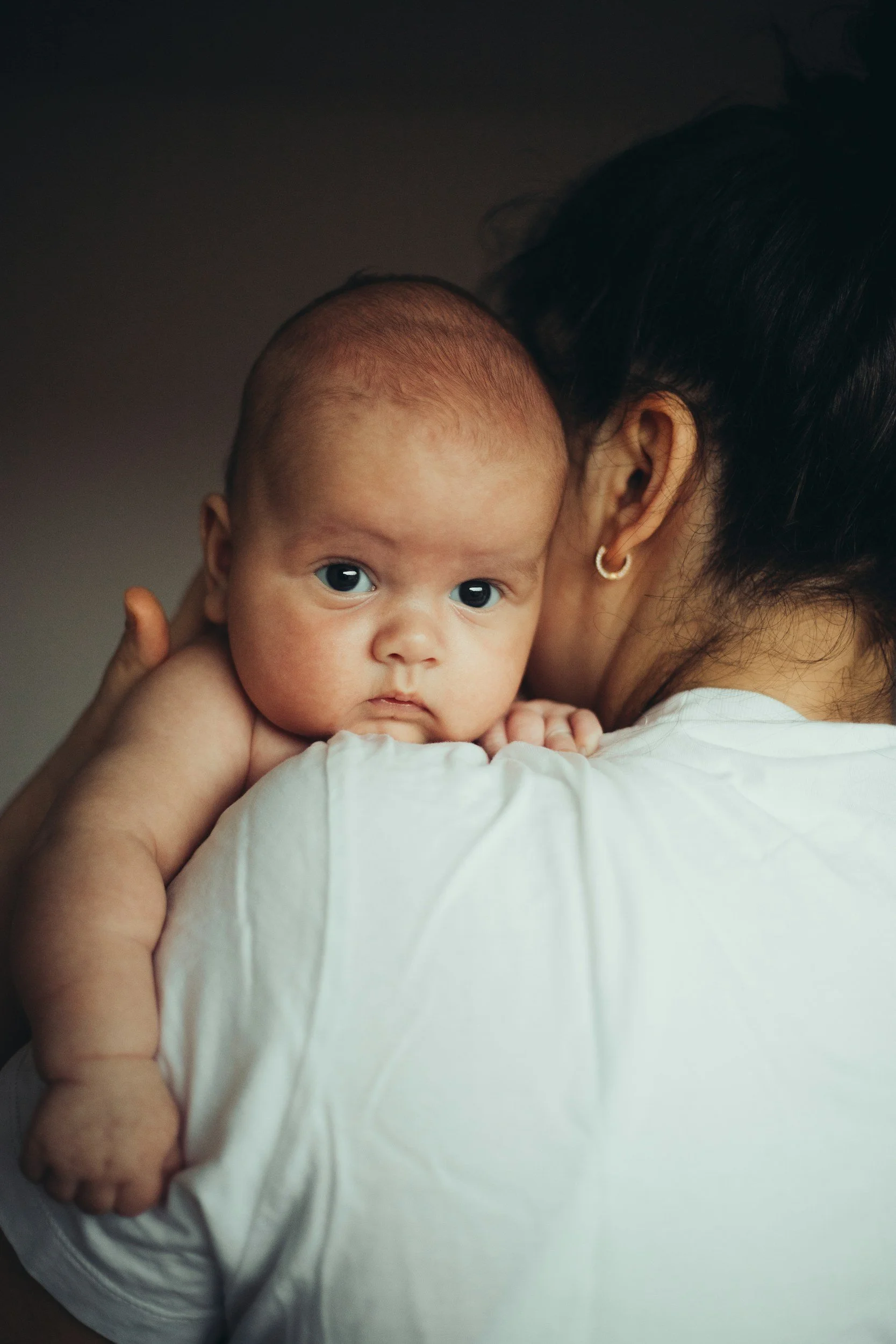
By day, postpartum can almost feel manageable.
The house is busy enough to keep your mind moving. Someone texts to check in. A friend drops off coffee and stays for twenty minutes while you talk about the baby and how things are going. Maybe your mom swings by with lunch and does a load of laundry. Maybe someone holds the baby while you take a long, hot shower in peace. The daylight itself feels supportive somehow, like the world is still reachable.
There’s noise. Motion. Distraction.
Even when you’re overwhelmed, you’re carried a little by the rhythm of daytime. The baby needs to eat. The laundry needs to move over. Your phone keeps buzzing with “how are you doing mama?” messages. You get lots of support during socially acceptable business hours.
But then evening comes.
The visitors leave. The dishes sit abandoned in the sink. The texts slow down. Your partner starts locking doors and dimming lights. Outside, the sky changes almost without warning, and suddenly the house feels too quiet.
And something in you shifts too.
Maybe it starts as restlessness. Maybe it’s a heaviness in your chest you can’t explain. Maybe tears come out of nowhere while you’re bouncing the baby who’s ultra sensitive to the time shift, too. Nothing is technically wrong, but your nervous system begins acting like danger is nearby anyway.
For many mothers, postpartum anxiety arrives exactly like this. Quietly. Predictably. Right at sundown.
And nobody really mentions it much.
Nobody warns you that nighttime can feel emotionally different after birth. That the same house which felt manageable at noon can suddenly feel isolating at 8 PM. That your thoughts may get louder the darker it gets. That exhaustion and hormones and responsibility can combine into a kind of fear that feels physical.
Because daytime postpartum and nighttime postpartum can feel like two entirely different experiences.
During the day, there are witnesses to your motherhood. People stop by and admire the baby. They reassure you. They help carry things. Even struggling can feel communal in daylight.
But at night, it’s just you staring at the monitor. You listening for every tiny sound from the bassinet. You wondering why your heart suddenly feels like it’s racing for no reason at all.
Rarely does someone drop by at sundown and say, “Hey, this is the hour that might feel hardest. I’m here to help.”
And that loneliness can become its own kind of ache.
Some mothers begin dreading nighttime long before it arrives. As the sun starts setting, anxiety creeps in behind it. You might feel emotionally unsafe in a way you can’t fully explain. You may check repeatedly to make sure the baby is breathing. You may feel panicked when everyone else starts falling asleep. You may have intrusive thoughts that terrify you, followed immediately by shame that your brain went there at all.
Then comes the guilt.
Because mothers are told constantly that this season is supposed to feel magical. Sacred. Blissful. Meanwhile you’re sitting in the dark scrolling Reddit boards and wondering whether it’s normal to feel like your nervous system is on fire while a newborn sleeps peacefully beside you.
It is more common than people admit.
Postpartum anxiety thrives in silence, and silence is exactly what nighttime brings.
There’s less noise. Less distraction. Less reassurance from the outside world. The darkness itself can feel heavy. Ancient, even. Humans are still animals underneath all the technology and ring lights and grocery pickup orders. Somewhere deep in the body, night still means vulnerability. Add a newborn to the equation and suddenly your brain starts acting like you personally are responsible for holding the entire universe together until sunrise.
That kind of pressure does something to a person.
There are real biological reasons for this, too. Hormones shift dramatically after birth. Sleep deprivation affects emotional regulation and increases anxiety. Your brain becomes hyper-alert because you are wired to protect your baby. The problem is that postpartum anxiety turns vigilance into overdrive. Your body stops distinguishing between possibility and emergency.
What many mothers need during this season is not judgment or immediate fixing. It’s recognition. It’s someone saying, “This happened to me too.” It’s hearing another woman admit she used to cry every evening around sunset for no identifiable reason. It’s learning that intrusive thoughts can be a symptom of anxiety, not a secret desire you plan to act out on. It’s understanding that exhaustion can distort reality until even ordinary moments feel catastrophic.
Mostly, it’s solidarity.
Because postpartum can become incredibly isolating, especially at night. The rest of the world appears asleep while you sit awake in dim lighting holding a baby and wondering why you suddenly feel so afraid. There is a particular loneliness in believing nobody else could possibly understand what is happening inside your mind.
But they do.
Somewhere, in another dim kitchen, another mother is pacing the floor with a baby against her chest trying to outrun the same fear. Another woman is watching the clock crawl toward morning while everyone else in her house sleeps. Another mother is wondering why nighttime makes her feel like she’s disappearing a little.
She isn’t disappearing.
And neither are you.
This is why support matters so much after birth. Sometimes that support looks like therapy or medical care. Sometimes it looks like a postpartum doula sitting with you through those heavy evening hours, helping the transition into night feel less isolating and less sharp around the edges. Sometimes it looks like a friend texting after dark instead of during lunchtime. Sometimes it’s simply another mother saying, “I remember this. I thought I was alone too.”
There is something deeply healing about being witnessed in the dark instead of only celebrated in the light.
And if you are reading this while the sun is going down and that familiar heaviness is beginning to creep in, here is what I hope you remember tonight:
You are not broken because motherhood feels harder in the dark.
You are not weak because anxiety found you during a vulnerable season.
You are not the only mother awake right now trying to make peace with her own nervous system.
Morning will come. Your body will not feel this raw forever. And until then, there is an entire quiet sisterhood of women who have loved their babies fiercely while also fighting their way through the night.
The National Baby Co team offers birth doula, postpartum doula, fertility doula support, and sleep consulting for growing families across the United States. We have doulas based in Southern California, San Diego, San Francisco and the Bay Area, Denver, Metro Detroit, Lansing, Ann Arbor, New York City, North Jersey, Charlotte, Portland, Eugene, Knoxville, Houston, Orlando, and beyond through virtual support options. Whether you're preparing for birth, navigating postpartum, trying to conceive, or looking for better sleep, our team is here to help with thoughtful, personalized care. For doula support, inquire here.