
How I Approach Herbal Support in My Doula Practice
This is a conversation I find myself having with other doulas often… not because herbs are the center of my work, but because many of us are quietly trying to figure out how herbal support fits into doula care without crossing scope or adding unnecessary complexity.
Everything shared here is educational and based on how I personally incorporate herbal support into my doula practice. It is not medical advice and is not intended to replace guidance from a trained herbalist or medical provider. Yes, you will see a few affiliate links here, which means that if you choose to purchase through them, I may earn a small commission at no additional cost to you. I only link to sources and books I genuinely trust, have used myself, or personally recommend when people ask where I learned about herbs or where I source my herbs.
I am not a trained or certified herbalist, and I am very clear about that with everyone. What I am is a suburban homesteader, home herbalist, mother, and doula who values nourishment, empowered self-learning, and realistic and holistic support. Herbs, when used appropriately, can complement that work beautifully. They are not the fix, the focus, or the promise, but I do believe they are part of a larger ecosystem of mother care, doula care, and home care.
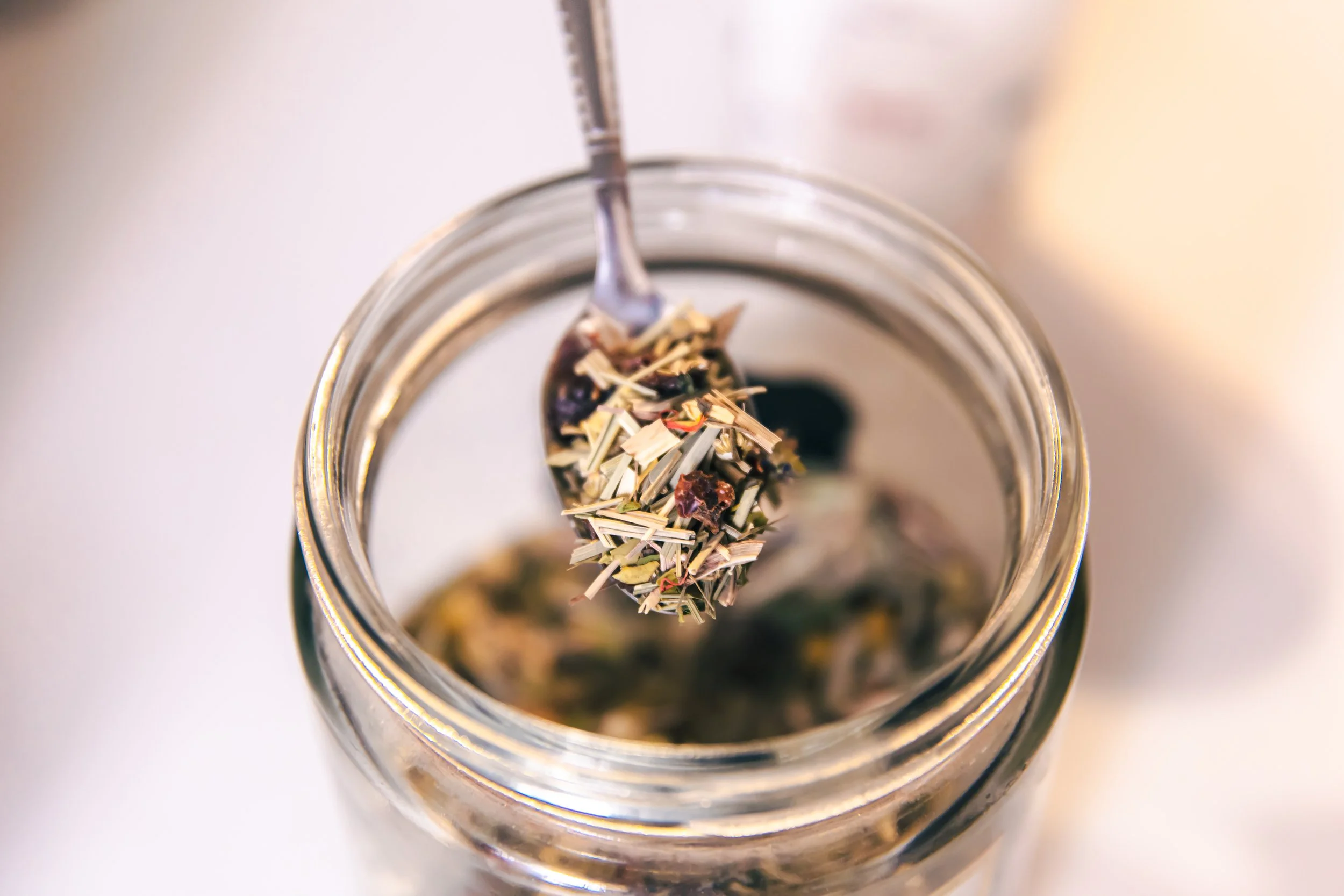
How I Think About Herbs as a Doula
My approach to herbs mirrors my approach to doula work. Uncomplicated, intuitive, and rooted in trusting the Creator.
I am intentional about what I keep on hand in my own herbal pantry because I want to be able to explain why something is used, how it has traditionally been used, and where it fits into the bigger picture of nourishment and support. I personally avoid complicated blends and protocols that feel overwhelming or difficult to explain clearly. I myself get overwhelmed easily when there are too many steps, too much to keep track of, and for that reason I aim to keep things simple in my herbal use and my education.
Language matters here. When I talk about herbs with clients, I frame them as nourishment, comfort, and tradition. I avoid outcome-based language or anything that suggests herbs will cause or prevent a specific result. Staying mindful of my scope of practice as a doula builds trust with both my clients and their care providers. Anytime I’m discussing herbs with my clients, I recommend they consult with a trained and certified herbalist or their midwife or OB.
For me, herbal quality is non-negotiable. Fertility, pregnancy, and postpartum bodies are sensitive and often depleted. The way herbs are grown, harvested, and processed matters. I source organic, ethically harvested herbs and stick with companies that are transparent and consistent. This is why I source many of my bulk herbs and teas from Mountain Rose Herbs and often suggest them to other doulas or clients who want an organic, quality-driven, reliable supplier they can feel good about. I also enjoy Frontier Co-Op, Starwest Botanicals, and Earthwise Aromatics.
Herbs for Fertility
When I support clients in my fertility doula work, the conversation is rarely about doing more. It is almost always about simplifying, slowing down, and rebuilding what has been depleted.
This is where education in my doula practice matters. I talk to my clients about stress, mineral loss, blood sugar, nervous system regulation, and how fertility does not exist in isolation from the rest of life. Herbal support here is framed as nourishment over time, something that works best when paired with food, rest, joy, and realistic expectations, not as a quick solution or something meant to override the body.
Here are a few of the herbs my clients tend to be drawn to during the preconception phase:
Nettle Leaf
Nettle is usually one of the first herbs that comes up in fertility conversations. It is easy to use and incredibly nourishing, packed with minerals that support overall vitality and iron levels. I often describe it as a simple way to complement good nutrition, adequate hydration, and rest while preparing the body for pregnancy.
Red Raspberry Leaf
Red raspberry leaf requires a bit more nuance. In my experience, it is most relevant preconception rather than in pregnancy. Traditionally, it is used to support uterine tone when incorporated consistently over time. I make sure clients understand it is not a quick-fix or something to take reactively without context.
Oatstraw
Oatstraw naturally opens the door to conversations about the nervous system. Long fertility journeys, burnout, and chronic stress can take a serious toll. Oatstraw can provide gentle, supportive nourishment to help replenish and strengthen the body, especially for clients who feel exhausted despite doing all the right things.
Herbs for Pregnancy
During pregnancy, I discuss herb use thoughtfully, with a focus on familiar, gentle options that can support comfort, digestion, rest, and emotional balance. The goal is to provide nourishment and subtle support for the nervous system, helping clients feel more grounded and connected to their bodies.
Chamomile
Traditionally, chamomile has been used for calming the nervous system, supporting restful sleep, and soothing mild digestive discomfort. I frame it as occasional support rather than a daily requirement, emphasizing comfort and ritual over outcomes.
Lemon Balm
Lemon balm is helpful when clients describe racing thoughts or difficulty winding down. It can be used as a gentle support for emotional balance and nervous system regulation, often incorporated into evening teas to encourage relaxation.
Ginger Root
Ginger is accessible and easy to incorporate because it is already part of many diets. I discuss it primarily as digestive support and for occasional nausea relief. You can opt for ginger root that is dried or fresh which is accessible at any grocery store.
Herbs for Birth Prep
As birth approaches, herbal conversations must remain carefully framed. My goal is always to educate and provide context, not to direct use or promise outcomes.
Red Raspberry Leaf
One of the most commonly discussed and recommended herbs in pregnancy (especially late pregnancy) is red raspberry leaf. Traditionally, it has been used to support uterine tone over time. I always emphasize that timing is important (typically started in the third trimester around 30-32 weeks) and that any use should be discussed with the care provider first.
Herbs for Postpartum
Postpartum is where herbal support often makes the most sense in practice. This period is marked by depletion, tissue recovery, and emotional adjustment, and herbs can support comfort and ritual without adding pressure.
Calendula
Calendula is a staple in my postpartum kit and my #1 must-have herb not only for myself and my family, but for my clients. I typically use calendula in sitz baths, compresses, or salves to support gentle tissue healing. I highlight its traditional use and practical applications to make it approachable for families.
Lavender
Lavender helps support rest and emotional grounding. I often incorporate lavender into postpartum baths, simple syrups for a sweetener, or even in a sachet under the pillow to encourage relaxation and mental calm.
Oatstraw and Nettle
Oatstraw and nettle return to focus postpartum to help replenish mineral reserves and support the nervous system. These herbs can be used as gentle nourishment and incorporated into infusions or teas that are easy for moms to use while navigating the early weeks of care.
Continuing Education on Herbs
I am a big believer that doulas do not need to know everything, but we do need to stay curious and informed.
For those who want to deepen their understanding of herbs the Free Herbalism Project is a great option. Herbal Academy offers accessible, well-structured education that you may find helpful. They’re currently offering up to 40% off their herbalism courses and offer payment plans. Mountain Rose Herbs is also a helpful educational resource, with extensive herb profiles and learning materials alongside their products. Common Wealth Herbs has some free introductory workshops, courses that are targeted for specific herbs or ailments, along with a Herbs for Birth Workers course. Birth Arts International also offers a Herbalism for Birtworkers course and is currently 35% off with code WINTER35.
There are also a few books that have shaped how I think about herbal support in childbearing years:
Wise Woman Herbal for the Childbearing Year, Volume 1 by Susun S. Weed
The Herbal Doula by Marie White
Mother Food by Hilary Jacobson
The Lost Book of Herbal Remedies by Claude Davis and Nicole Apelian
Forgotten Home Apothecary by Dr. Nicole Apelian
These are resources I return to not necessarily for protocols or recipes (although those are included here), but for context, tradition, and perspective.
Why I Keep My Herbal Pantry Small
As a wife, mom, business owner, and doula, I already hold a lot.
I do not want herbs to feel like another thing I need to manage or perfect. A small number of well-sourced herbs, used consistently and simply, aligns far better with what real life looks like during fertility, pregnancy, and postpartum.
If you are a doula building your practice, you do not need to master herbalism. But you do need to understand your scope, choose your language intentionally, and know why you use what you use and provide education and empowerment for your clients to do the same if they wish. Everything else can stay simple.